Wednesday, December 12, 2018

Nuestra Senora de Guadalupe, Immaculate Conception, and the Annunciation, for Advent Season Reflections


Have you noticed that the Gospel reading for Solemnity of the Immaculate Conception of the Blessed Virgin Mary (December 8) and the Gospel reading for the Feast of Our Lady of Guadalupe (December 12) are the same, both taken from Luke 1:26-38 for the USCCB jurisdiction? Not to mention, this Lucan Gospel narrative is also for the Solemnity of the Annunciation of the Lord (March 25). 

What holds both the Solemnity of the Immaculate Conception and the Feast of Our Lady of Guadalupe is the event of the Annunciation of Mary’s pregnancy with the Son of God.

The Annunciation came out of the blue and hit Mary by surprise. She was disturbed by Gabriel announcing that she is full of grace (she is God’s favored one) and wondered what sort of greeting this might be (Luke 1:28-29). Then, sensing Mary’s troubled reaction, Gabriel assured her not to be afraid because God chose her to be in favor with Him to conceive His Son, named Jesus, in her womb (Luke 1:30-31).  Then, Gabriel explained that the Son in her womb would grow to serve as the King of the Kingdom with no end, with the Davidic lineage (Luke 1:32-33). However, Mary seemed clueless about what this messenger of God was speaking about. So, she uttered, in response, “How can this be, since I have no relations with a man?”(Luke 1:34).

Mary was wondering how she can become pregnant as she has not actually had a physical relation with Joseph, the man she was betrothed to. She was puzzled how a virgin could have a child of a man, whom she had has not even seen.

In response to Mary’s bewildering, Gabriel further explained that it is the power of God through the Holy Spirit makes it possible to impregnate her, a virgin, without any physical contact. The messenger of God also told her that the child to be born of her will be called Holy, the Son of God (Luke 1:35). Then, Mary was also informed that her elder cousin, Elizabeth, is now pregnant, though she had passed the childbearing age and had been barren (Luke 1:36).  Gabriel reasoned that all of these surprising phenomenon were made into the reality because nothing is impossible for God when He wills (Luke 1:37). Then, finally, Mary was able to settle the whole matter with these resolving words, “Behold, I am the handmaid of the Lord. May it be done to me according to your word”(Luke 1:38).
Image result for image of annunciation handmaid


Yes, it is about Mary, who is the Immaculate Conception, serving the will of God, as the handmaid of the Lord, when she appeared to San Juan Diego at the foot of the Tepeyac hill in 1531.  Just as God sent His greeting to Mary by surprise, Juan met her and was greeted by surprise.  She chose this peasant convert to do more for the will of the Lord, the expansion of His Kingdom in the land of paganism.  This was different from what the bishop was doing as his mission was brought by the conquistadors.  Mary, as Our Lady of Gudadalupe, said to Juan in the greeting:

Know for sure, my dearest, littlest, and youngest son, that I am the perfect and ever Virgin Holy Mary, Mother of the God of truth through Whom everything lives, the Lord of all things near us, the Lord of heaven and earth. I want very much to have a little house built here for me, in which I will show Him, I will exalt Him and make Him manifest. I will give Him to the people in all my personal love, in my compassion, in my help, in my protection: because I am truly your merciful Mother, yours and all the people who live united in this land and of all the other people of different ancestries, my lovers, who love me, those who seek me, those who trust in me. Here I will hear their weeping, their complaints and heal all their sorrows, hardships and sufferings. And to bring about what my compassionate and merciful concern is trying to achieve, you must go to the residence of the Bishop of Mexico and tell him that I sent you here to show him how strongly I wish him to build me a temple here on the plain; you will report to him exactly all you have seen, admired and what you have heard. Know for sure I will appreciate it very much, be grateful and will reward you. And you? You will deserve very much the reward I will give you for your fatigue, the work and trouble that my mission will cause you. Now my dearest son, you have heard my breath, my word; go now and put forth your best effort.

With the above words, Mary chose Juan Diego and commissioned him to be sent to his bishop, as her envoy, which means, her Son’s envoy, namely, as an apostle.

Just as Mary was to God and His Son, and her Son, Juan was also obedient to her. However, it was not always easy for him to do as Mary instructed him. Reminding him that she is also his mother, Mary encouraged him to trust in the way a little child trust his or her mother.

What is happening, dearest and youngest of my sons? Where are you going? Where are you headed?

Listen, put it into your heart, my youngest and dearest son, that the thing that disturbs you, the thing that afflicts you, is nothing. Do not let your countenance, your heart be disturbed. Do not fear this sickness of your uncle or any other sickness, nor anything that is sharp or hurtful. Am I not here, I, who am your Mother? Are you not under my shadow and protection? Am I not the source of your joy? Are you not in the hollow of my mantle, in the crossing of my arms? Do you need anything more? Let nothing else worry you, disturb you. Do not let your uncle's illness worry you, because he will not die now. You may be certain that he is already well.

Go up, my dearest son, to the top of the hill, to where you saw me and received my directions and you will find different kinds of flowers. Cut them, gather them, put them all together, then come down here and bring them before me.

My youngest and dearest son, these different kinds of flowers are the proof, the sign that you will take to the Bishop. You will tell him from me that he is to see in them my desire, and therefore he is to carry out my wish, my will. And you, who are my messenger, in you I place my absolute trust. I strictly order you not to unfold your tilma or reveal its contents until you are in his presence. You will relate to him everything very carefully: how I sent you to the top of the hill to cut and gather flowers, all you saw and marveled at in order to convince the Governing Priest so that he will then do what lies within his responsibility so that my house of God which I requested will be made, will be built.

When his uncle became gravely ill, Juan chose to visit him to care for, rather than to meet Mary. To this, she called him to give her his complete trust because she is his mother.  

Image result for image of our lady of guadalupe juan diego


The way San Juan Diego was to Mary, Our Lady of Guadalupe, in 1531, reflects the way Mary, a young virgin, was to God, as His handmaid. It is about obedience based on complete trust, called faith. Mary makes the perfect example of obedience because she is the Immaculate Conception, meaning that she is the only human being with no trace of the Original Sin, as she was conceived immaculately with God’s favor. This is why Mary is “gratia plena”. 

Though no other human being has been immaculately conceived, Juan Diego was a humble man. So, Mary chose him to serve her, as service to her means to serve the one, whom she serves as His handmaid.  

The Feast of Our Lady of Guadalupe, in light of the Immaculate Conception and the Annunciation, not only reminds but rather inspires us to respond with obedience, rooted in our faith, when God calls us to a task of His will. And, this call may come through Mary, Nuestra Senora de Guadalupe.

There is salvific, as well as, apostolic reason for Mary to be the Immaculate Conception, gratia plena. Because of this, she served as the Theotokos, as Gabriel announced her by surprise.  Though it was rather challenging to her and brought her great suffering, Mary nevertheless carried through her mission as the Mother with her obedience. At the foot of the Cross, she was also made as our mother (Nuestra Madre, Nuestra Senora) (John 19:27).  Thus, nuestro hermano y amigo, San Juan Diego, has given us, the rest of Mary’s little children, a good example of serving Nuestra Madre, Nuestra Senora. The story of San Juan Diego and Nuestra Senora de Guadalupe also reminds us of her mercy and encouragement. God continues to let Mary serve Him as the Immaculate vehicle of His will to be done for the Kingdom in His Son’s name, besides in His name and in the name of the Holy Spirit.

Are we always prepared to meet the Lord through Mary to do His will?  Learning from Mary at the Annunciation and San Juan Diego in Tepeyac, our appreciate reading from the Lucan Gospel story of the Annunciation for the Solemnity of the Immaculate Conception and the la Fiesta de Nuestra Senora de Guadalupe during the Advent Season.

Saturday, December 8, 2018

Immaculata Conceptio Mariae, Ora Pro Nobis!

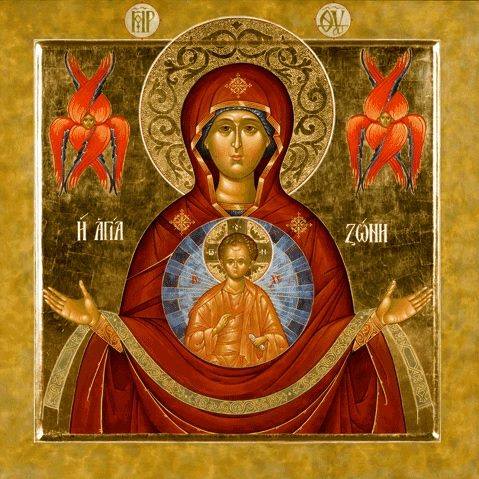
A reflection of the Immaculate Conception - Gratia Plena for Christ, who came, is coming, and will come..

Ave Maria, gratia plena, Dominus tecum.
Benedicta tu in mulieribus,
et benedictus fructus ventris tui, Iesus.
Sancta Maria, Mater Dei,
ora pro nobis peccatoribus,nunc et in hora mortis nostrae. Amen.
Image result for Immaculata Conceptio iMAGE


The Solemnity of the Immaculate Conception of the Blessed Virgin Mary, December 8, is about how God’s grace has been affecting the humans through Mary.  It is to refresh our hope for salvation with Mary being gratia plena (full of grace) to conceive the Son of God so that the Logos-Theos (John 1:1) can makes his adventus in human flesh, namely, making theophany in the human flesh of Jesus to dwell among us (John 1:14). Putting himself amidst us, Jesus, being the Son of God, the Christ, can save us, as his name, “Jesus” in Hebrew, ישוע (Yeshua), means – God saves.  

Based on John Duns Scotus’ argument, “Utrum Beata Virgo fuerit concepta in peccato originali”(whether the Blessed Virgin was conceived without a trace of the Original Sin) in his commentaries of Peter Lomberd’s Third Lecture, Lectura in Librum Tertium Sententiarum, Mary, as the Theotokos,  had to be gratia plena ever since the moment when she was conceived in Ann’s womb for Logos-Theos to save us by coming to us in the human flesh. It means that Mary has to be preserved completely free from any stain of the Sin of Adam and Eve, from her conception, in order to serve God as the Theotokos - for her to say, "Behold, I am the handmaid of the Lord. May it be done to me according to your word" (Luke 1:38).

As to solidify Scotus’ theological argument of the Immaculate Conception of Mary further, Pope Pius IX established the theological doctrine of the Immaculate Conception of the Blessed Virgin Mary in Ineffabilis Deus (1854).  Based on this Pope Pius IX’s apostolic constitution, the first reading for the Solemnity of Immaculate Conception Mass, Genesis 3:9-15, 20, reminds us that God was already planning to bring the humans, who had fallen with the sin of Adam and Eve, back to Him. By saying these words to Satan, who defiled Adam and Eve, God had already elected a woman, whose child will defeat Satan and his followers, so that the humans will be saved completely.

I will put enmity between you and the woman, and between your offspring and hers; They will strike at your head, while you strike at their heel (Genesis 3:15).

Namely, the defeat of Satan and his offspring by Mary’s reflects Revelation 20:7-10 toward the eschaton.  For this God’s salvific plan to be executed and complete, Mary was chosen to be conceived gratia plena – without any trace of the Original Sin., being just as perfect as Adam and Eve before being tempted by Satan, so that she can give the virgin birth to the Son of God, Jesus Christ.


The Latin word for grace, gratia, corresponds to חֵן (chen) in the Old Testament Hebrew and ἔλεος (eleos) in the New Testament Greek. In fact, ἔλεος (eleos) is a Greek translation of the Hebrew word, חֵסֵד (chesed), which characterizes the everlasting covenant love of God for us. חֵסֵד (chesed), חֵן (chen), and רחמים (rachamim) are closely related to one another in the Old Testament, connecting God’s covenant love and mercy to what characterize God’s grace. 

Interestingly, the Hebrew word for womb, רֶחֶם (rechem), is etymologically connected with רחמים (rachamim), which means mercy and connected to חֵסֵד (chesed), חֵן (chen), and ἔλεος (eleos). Therefore, Mary’s Immaculate Conception made her gratia plena, as Angel Gabriel said to her, “εὗρες γὰρ χάριν παρὰ τῷ Θεῷ/ heures gar charin para to Theo” – “invenisti enim gratiam apud Deum” –“ you are found in favor with God” (Luke 1:30), as reflected in the First Reading for this Marian Solemnity.  Because of this, Mary is the one to conceive the Son of God, who is to be named Jesus in her womb (Luke 1:31) through the Holy Spirit (Luke 1:35) though she remained virgin.  See how God’s חֵן (chen) out of His חֵסֵד (chesed) affected the רֶחֶם (rechem) of the Immaculate Virgin Mary to incarnate Logos-Theos to save us through Jesus so that God’s words in Genesis 3:15 will be perfectly fulfilled at the time of Parousia, the actual “Advent”, we are preparing for.  And, this is, indeed, the  רחמים (rachamim) of God!

Deo gratia, quia Christus ex Immaculata Conceptio Mariae ! Laudamus te! Benedicimus te!   Adoramus te! Glorificamus te! Amen!


Monday, December 3, 2018

First Sunday of Advent: Parousia - Nativity Juxtaposition with ἀγρυπνέω(agrupneo) and γρηγορέω(gregoreo)


Happy New Liturgical Year!

The first Sunday of Advent marks a new beginning – the beginning of a new liturgical year. This first Sunday of a liturgical year also set the tone not only for the entire Advent season but for the entire liturgical year, which concludes with the week of the Solemnity of Christ the King of the Universe.  It is because the Gospel readings for the First Sunday of Advent (the First Sunday of a liturgical year), Matthew 24:37-44(A); Mark 13:33-37(B); Luke 21:25-28, 34-36(C), are all about our preparedness for the Parousia.  

Parousia?  That is a theme for the closing of a liturgical year to prepare ourselves for the Solemnity of Christ the King of the Universe.  Certainly, these First Advent Sunday readings are also fitting to prepare for the return of Christ, echoed in Revelation 19:11-16, upon enduring the tribulations (Revelation 6 – 16).  But you may wonder why we read the Gospel texts for the preparation for the Parousia, as we prepare ourselves for the Nativity of Christ in “ἀνάμνησις (anamnesis)”?

There is a juxtaposition between how we prepare ourselves in celebrating the Nativity of Christ and how we prepare ourselves for the Parousia.  What is common to these two: preparation to celebrate the Nativity of Christ (Christmas) and preparation for the Parousia (returning of Christ) is expressed in these Greek words: ἀγρυπνέω(agrupneo) and γρηγορέω(gregoreo).  These verbs are basically indicating to be alert and to be vigilant.  Agrupneo (a = not + hypnos = sleep) literally means not asleep and found in Mark 13:33 on Cycle B and Luke 21:36 on Cycle C. On the other hand, gregoreo is used in Matthew 24:43 and 44 on Cycle A and literally means to be in the state of awaken, as it stems from ἐγείρω(egeiro), which means to wake up or to rise up.  These Greek words to indicate alertness and vigilance to characterize how we prepare ourselves for the Prousia also reflect the state of those who witnessed the Nativity of Christ about 2,000 years ago in Bethlehem.

When Christ was born, both Mary and Joseph were awake in that predawn time. Then, shepherd who stayed awake in guarding sheep throughout that night were called to witness the birth of Christ (Luke 2:8-20), while the rest of the world at that time was asleep, not noticing how the Nativity of Christ took place.

What we learn from the above-mentioned Gospel readings for the First Sundays of Advent of all liturgical cycles (A, B, C) to prepare to celebrate the Nativity is also to stay alert and vigilant as the shepherd, who witnessed the Nativity.  Remaining as alert and vigilant as the shepherd on night watch, who witnessed the Nativity about 2,000 years ago, is what we need not to miss the return of Christ.

Christ – the Messiah has come in the human flesh of Jesus, died, risen, and gone up to the Father in heaven.  The gate of heaven has been open ever since. In the meantime, he continues to be with us as the Father has sent the Holy Spirit, another Parakletos in his name (John 14:16) and through the Sacrament of the Holy Eucharist, as he promised in Matthew 28:20.  And, he is coming again to judge the living and the dead, ushering the faithful, whose names are in the Book of Life into heaven, upon the judgement, and to close the gate for good.

After all, our life as baptized and confirmed Christians is ultimately to face the return of Christ in the state of grace. As we profess in the Apostle’s Creed and the Nicene Creed, Christ will return to judge the living and the dead before ushering us into the Kingdom (Revelation 20:11-15; Acts 10:42; 2 Timothy 4:1-2;1 Peter 4:1-8), we must remain prepared and ready to face the Parousia as Jesus has taught in Matthew 25.  In fact, we, as the Church, must be stand ready for the Parousia by making ourselves as worthy to be Christ’s bride (Revelation 19:6-9). It means that we, as the Church, ensure that we are as pure as a virgin bride in the eyes of God at a time of the Parousia.  To be as spiritually pure as a virgin worthy to be Christ’s bride at the eschaton, we must become and remain in the state of grace.  


We begin a liturgical year with the Advent season to remind ourselves of our need to be prepared for the coming of Christ, remaining alert and vigilant. We also end the liturgical year with the week of the solemnity of Christ the King, again, with alertness and vigilance. As we remain alert and vigilant, we make better efforts to keep us in the state of grace, upon our penance and reconciliation.  With this alertness and vigilance, we can better focus on Christ, who is the reason not only for the Advent season but for the entire liturgical year, rather than being affected by what the world tries to influence us.

With our alertness and vigilance, we make sure that  worldly “Xmas” things will not make us drowsy.  As Paul has encouraged us in Romans 12:2, let us not become conformed to the world, which makes us asleep with materialism and consumerism, keeping us away from the one has come, is with us, and is coming. The worldly “Xmas” temps us with the disguise of “gifts” during this Advent season.  Remember, the shepherd, who were alert and vigilant, were present at the scene of the Nativity with the gift of their presence. So, why don’t we bring the same birthday present – our genuine presence – to Christ on his birthday?  Let us distance from the worldly noise of commercialism, which tries to tarnish the Advent-Christmas season with materialism and consumerism.  Let our faith keep us from falling drowsy with “Xmas” commercialism, as the faith helps us to stay alert and vigilant.

Nobody knows the hour and the day of his return. But, perhaps, Christ will come from the east (Matthew 24:27), as he is also known as the sun of righteousness (Malachi 4:2).  The sky will be darken as the sun will no longer shine when his coming is imminent (Matthew 24:29//Mark 13:24; Revelation 6:12), as to remind that it was also dark when Christ was born. It is because there is no need for the sun to shine when Christ returns as written in Revelation 21:23.

Sunday, November 4, 2018

Jesus’ New Rabbinic Teaching of the Supreme Mitzah on Unconditional Love (Agape)


Jesus put two mitzvot on love (aheb ) when a scribe asked him, “Which mitzvah is the most important (Mark 12:28),? By putting Deuteronomy 6:4-5 and Leviticus 19:18, saying, “The first is this: ‘Hear, O Israel! The Lord our God is Lord alone! You shall love the Lord your God with all your heart, with all your soul, with all your mind, and with all your strength’. The second is this: ‘You shall love your neighbor as yourself.’ There is no other commandment greater than these”(Mark 12:29-31), Jesus made his new rabbinic teaching on love, juxtaposing the mitzah to love God without anything held back (Deuteronomy 6:5) ,because God alone is the Lord (Deuteronomy 6:4), to the mitzvah to love our neighbors as ourselves (Leviticus 19:18), as the supreme mitzvah of agape.

In the Hebrew Torah, these mitzvot are on aheb, which is understood as love that humans exercise ( in contrast to chesed that God practices on us as His steadfast love, mercy, and kindness). However, in the Gospel, as becoming Jesus’ new rabbinic teaching on love, these mitzvot on aheb have become the supreme mitzvah on agape in Jesus’ new rabbinic teaching. Agape in the New Testament corresponds not only to aheb but also chesed in the Hebrew Testament. Namely, agape in the New Testament makes both aheb and chesed juxtaposed in one word of the supreme love. As chesed is on God’s level, while ahed is on human, putting these Hebrew words on love into one New Testament Greek word, agape, in Jesus’ new rabbinic teaching on love, really inspires us to elevate the level of our love (aheb) to God’s love (chesed) as we practice our agape for God by practicing our agape for our neighbors. As we hold nothing back in practicing our agape for God, as reflected in Deuteronomy 6:5, we hold nothing back in practicing our agape for our neighbors. In other words, Jesus wants us to love our neighbors just as unconditionally as we love God so. Otherwise, our aheb would be so far from God’s chesed, as it would not be worthy to be considered as agape. In fact, agape is the essence of Jesus’ mandatum novum: To love one another as Jesus has loves us (John 13:34), as keeping this new mitzvah of Jesus on agape makes us his disciples (John 13:35).

In essence, Jesus’ mandatum novum (John 13:34) is his encouragement for us to elevate our aheb for one another – our neighbors - to God’s chesed for us, as Jesus wants us to love one another as he has loved us. Jesus’ love for us is always on the level of chesed, because he is one with the Father, whose love is always chesed. This is a great challenge but very meaningful one in following the path of Jesus as his disciples.  We are called to love one another – our neighbors, as Jesus, who is God, has loved us in his mandatum novum (John 13:34). In addition, through his new rabbinic teaching on the supreme mitzah on agape (Mark 12:29-31 – Deuteronomy 6:5; Leviticus 19:18), we come to understand that we really cannot practice agape for God, to love God without any reservation, as commanded in Deuteronomy 6:5, unless we do so for  our neighbors – for each other (Leviticus 19:18). If we separate our neighbors and one another by distinguishing “us” from “others”, we are allowing devil, who divides and breaks us down” into our communion.

Among us, one another, who is our neighbor that we really need to practice this new rabbinic mitzvah of agape by Jesus (Mark 12:29-31)?

Jesus’ new mitzvah of agape is also found in his parable of the Good Samaritan narrative (Luke 10:25-37). In this, an expert of torah, asked Jesus, “Rabbi, what must I do to inherit eternal life?”(Luke 10:25). In response, Jesus the Rabbi, exercised “Socratic Dialogue”, asking him, “What is written in torah? What do you read there? “(v.26), testing if he understands the supreme mitzvah out of all 613 mitzvot in torah. Then, the torah expert answered, citing both Deuteronomy 6:4-5 and Leviticus 19:18, “You shall love the Lord your God with all your heart, and with all your soul, and with all your strengths, and with all your mind; and your neighbor as yourself”(v.27). His answer to Jesus’ question on the most important mitzvah in torah to inherit eternal life was correct. So, Jesus encouraged him to practice these two mitzvot he just cited for eternal life (v. 28). However, this expert of torah exposed his Pharisaic hypocrisy to Jesus, by saying, “Who is my neighbor?”(v. 29).  Then, Jesus’ response to his “stupid” question about who the neighbor to love is became the parable of the Good Samaritan (vv.30-37).  The parable teaches us that our neighbors to reach out with our agape in juxtaposition of Deuteronomy 6:5 and Leviticus 19:18 can be the very kind of people that we usually do not consider our neighbors, as they are different – as they are stranger to us – as they are foreigners – as they are not Christian.  But, the neighbor, whom the Good Samaritan practiced Jesus’ new rabbinic teaching on agape (Mark 12:29-31), juxtaposing Deuteronomy 6:5 and Leviticus 19:18, was a total stranger, while this neighbor was ignored by his own people.

Furthermore, Jesus’ new rabbinic teaching on agape for our neighbors as our way to show our unconditional love, agape, as the Good Samaritan has demonstrated, affects how we will be judged by Christ at eschaton. Upon reading the parable of the Good Samaritan in light of Jesus’ new rabbinic mitzvah on agape of paralleling our agape for God (Deuteronomy 6:5) and our agape for our neighbors (Leviticus 19:18) in Mark 12:29-31, now reflect it in the context of Matthew 25:31-46. You will see, then, why Jesus indicates that we cannot truly love God, as commanded in Deuteronomy 6:5, unless we can truly love our neighbors, as the Good Samaritan did with Leviticus 19:18.  Loving our neighbors in most need can be, after all, loving Christ in our midst.  When we face our judgement, we sure do not want to say to Christ, “Lord, when was it that we saw you hungry or thirsty or a stranger or naked or sick or in prison, and did not take care of you?”(Matthew 25:44).

In order to take Jesus’ new rabbinic teaching on the supreme mitzvah on gape in Mark 12:29-31, juxtaposing mitzvah of agape for God (Deuteronomy 6:5) and mitzvah of agape for our neighbors (Leviticus 19:18) into practice, we must ensure that our eyes are not blind to our neighbors in need, because our blindness to our neighbors’ need means our eyes are unable to see God, whom we are to love with all our heart, with all our soul, and with all our might. This blindness can cost our chance to inherit eternal life in the Kingdom to come.

May our eyes of agape be fully open with compassion to exercise the supreme mitzvah of agape, as the Good Samaritan did it for his neighbor in great need, so that we can truly love God with our agape. May our practice of agape for God by loving our neighbors make our agape more like God's chesed for us.

Sunday, October 21, 2018

"Sólo Dios Basta ..Tu Gracia Me Basta": Freedom from Anxiety in Christ - Salutogenic Pastoral Psychology from St. Teresa of Avila and St. Ignatius of Loyola


Anxiety has been plaguing us globally (i.e. Remes et al., 2016).  Because anxiety is closely associated with depression as a stress-related disorder (i.e. Kumar & Akoijam, 2017), the world-wide epidemic of anxiety may mean that so many people in the world have been under distress and gasping for a relief in depression.
  
The global epidemic of anxiety can trace its possible origin to Genesis 3, when Eve and Adam disobeyed their Creator, God, and allowed Satan’s destructive influence affect the original harmony between God the Creator and the human.  The disharmony in our relationship with God means our anxiety, as it is a reflection of our insecure attachment with God. This based on research studies on anxiety, juxtapositionally applying the mother-child attachment theory of Bowlby and Ainsworth (i.e. Ainsworth, 1989) to a possible correlation between out attachment to God and our well-being (i.e. Bradshaw et al., 2010, & Ellison et al., 2012).
  
Upon the fall by biting the forbidden fruit, Adam and Eve began experiencing anxiety, as they hid themselves from God – feeling shame but not really sorry for God by not being obedient to Him. Their self -awareness of being naked signals that they gained ego, as a result of the fall. Thus, Genesis 3 reminds that the today’s epidemic of anxiety has its origin to Adam and Eve becoming self-awareness with ego upon their fall, as ego-consciousness, shame, and anxiety are significantly associated (i.e. Muris et al., 2018).
  
To juxtapose the current state of anxiety epidemic with Dante Alighieri’s “Divine Comedy”, it is like “Inferno”. Fortunately, since the Father in heaven, the Creator, who remains to be rachum v’chanun (compassionate, merciful, and gracious), sent His only begotten Son, the Christ, to us out of His chesed – unbreakable everlasting love of God for us – so that he can shepherd us out of “Inferno” of anxiety epidemic state. That is why the Son is the Christ, whose mission is to deliver us from the “Inferno” of anxiety, which is associated with our sins since Adam and Eve, to the “Paradiso”, where we are totally free from anxiety, as well as any other effects of the Original Sin. As Moses and Joshua led the Israelites from Egypt to the Promised Land in Canaan in Exodus, Christ the Good Shepherd (John 10:11-18) and the Holy Spirit, another Parakletos, (John 14:16, 26),  lead our exodus journey from the “Inferno” of anxiety to “Paradiso” of freedom. The journey is our “Purgatorio”.  Upon becoming followers of Christ and receiving the Holy Spirit, we leave the “Inferno” and enter into the “Purgatorio” with the hope of successfully entering the “Paradiso”.

So, what are we to do to embark on this exodus journey of the “Purgatorio” from the anxiety “Inferno” to the “Paradiso” of freedom?  

More psychiatrists and psychologists to combat this mental health epidemic?  Perhaps so, but this is a typical answer by those who do not know God.  These mental health clinicians may provide helpful therapeutic service to some extent. As a pastoral psychologist, however, I meet many clients who express their frustration and dissatisfaction with conventional mental health treatments (psychotherapy and medication) , seeking a pastoral approach to overcome anxieties and anxiety-related psychosomatic problems. In response, my role for them is to facilitate the growth of faith for them so that they can benefit from salutogenic effects of grace that God has given us through Christ the Son and the Holy Spirit, another Parakletos, nahum, who can naham (experience sorrow for us) out of rechem (compassion).

Is the pastoral psychological service evidence-based? Yes, according to Hook et al. (2010) and a comprehensive review of relevant research studies in the Handbook of Religion and Health (2nd ed) by Koenig, King, and Carson (2012) . More empirical research studies to further verify clinical efficacy of pastoral (religious and spiritual) therapeutic approach to treat anxiety and other psychosomatic distresses are forthcoming. Now science is finally catching up with clinical efficacy as what Antonovsky (1979) has called “salutogenesis”  within our inner core, facilitated through God’s grace, which comes through Christ and the Holy Spirit, who is another Parakletos. However, salutogenesis in the pastoral context is based on faith (pistis, which literally means trust and confidence) in the source of salutogenic grace: God, as indicated by Jesus in Mark 5:34 ; 6:1-5.

Salutogenesis through faith-based pastoral psychological care focuses on faith’s combatant and protective effects against anxiety and its related problems, such as stress-induced depression, as it was made known by Jesus, about 2,000 years ago, as various Gospel narratives describe.  In his Sermon on the Mount, Jesus “prescribed” the best inoculation to anxieties and distresses.  In Matthew 5:25-34, Jesus reminds us that the best way to fight anxiety is to find the locus of life in God, rather than ego - nothing else, by encouraging us to seek God’s Kingdom and justice first (Matthew 5:33). The Kingdom is the “Paradiso”, the state of freedom from anxiety, and this true freedom only comes through Christ (John 8:34-36). Thus, to be in the Kingdom, which Jesus calls us to seek first to be free from anxiety, we must find our life in Christ, as it is the freedom as Paul describes in Romans 8. In fact, Jesus’ call on us to be delivered from the “Inferno” of anxiety into his Kingdom, the “Paradiso”, the freedom in Christ,  is echoed by St. Augustine of Hippo.  In  “Confession”,  St. Augustine said, “Fecisti nos ad te, Domine, et inquietum est cor nostrum donec requiescat in te”( You have made us for yourself, O Lord, and our heart is restless until it rests in you).

Now, how can we seek the Kingdom of God, the freedom,  in order to overcome and prevent anxiety?

According to two 16th century Spanish Catholic mystics – St. Teresa of Avila and St. Ignatius of Loyola, it is all about completely entrusting God by surrendering and dissolving ego to God, as Teresa’s “Nada te turbe” (nothing disturbs you) prayer and Ignatius’ “Suscipe”(receive) prayer reflect.  These poetic prayers invite us, as St. Teresa of Avila and St. Ignatius of Loyola did, to surrender our ego to the will of God – offering it up, asking God to receive it. To let go of our ego, which tends to focus on the worldly things rather than God, Teresa prayed:

Vénganle desamparos,
cruces, desgracias;
siendo Dios tu tesoro
nada te falta.

Id, pues, bienes del mundo;
id dichas vanas;
aunque todo lo pierda,
sólo Dios basta.

And, Ignatius prayed more radically:

Toma, Señor, y recibe mi libertad,
mi memoria, mi entendimiento y toda mi voluntad,
todo mi haber y mi poseer.

The above words in the two 16th-century Spanish mystics’ prayers are about denouncing our worldly attachment by resolving ego into God, and reflecting what Paul said in Galatians 2:20. Perhaps, this is like what nekkhamma is for nirvana in Buddhism’s Dharma teaching.

To put this important denunciation of worldly attachment and resolution of ego in Sikolohiyang Pilipino (Filipino indigenous psychology), we find our true kapwa (authentic self identity) in oneness with Christ (i.e. John 14:20; 15:1-9), as kapwa requires another being to understand who we are.  When we surrender and resolve our ego completely to Christ , we find our kapwa in Christ, namely becoming  one with him,  as Paul said in Galatians 2:20. When we attain this state, we can begin to experience the Kingdom – the “Paradiso” freedom from anxieties. Until then,  on our  exodus journey through the “Purgatorio”, we say to ourselves, making salvific and salutogenic self-fulfilling prophecy, “Nada me turbe….nada me espante…porque quien a Dios tiene nada le falta…por eso sólo Dios basta…Si, porque sólo Dios basta, no me preocupo….tu gracia me basta…”, as St. Teresa and St. Ignatius have prayed on their exodus.

In my pastoral psychology practice, I invite my clients, especially those who speak and understand Spanish, to reflect their journeys in “Pugatorio” upon below prayers of St. Teresa of Avila and St. Ignatius of Loyola.

Nada te turbe,
nada te espante,
todo se pasa,
Dios no se muda;
la paciencia
todo lo alcanza;
quien a Dios tiene
nada le falta:

Sólo Dios basta.
Eleva tu pensamiento,
al cielo sube,
por nada te acongojes,
nada te turbe.

A Jesucristo sigue
con pecho grande,
y, venga lo que venga,
nada te espante.

¿Ves la gloria del mundo?
Es gloria vana;
nada tiene de estable,
todo se pasa.

Aspira a lo celeste,
que siempre dura;
fiel y rico en promesas,
Dios no se muda.

Ámala cual merece
bondad inmensa;
pero no hay amor fino
sin la paciencia.

Confianza y fe viva
mantenga el alma,
que quien cree y espera
todo lo alcanza.

Del infierno acosado
aunque se viere,
burlará sus furores
quien a Dios tiene.

Vénganle desamparos,
cruces, desgracias;
siendo Dios tu tesoro
nada te falta.

Id, pues, bienes del mundo;
id dichas vanas;
aunque todo lo pierda,
sólo Dios basta.

Santa Teresa de Avila, Nada te Turbe

Toma, Señor, y recibe mi libertad,
mi memoria, mi entendimiento y toda mi voluntad,
todo mi haber y mi poseer.

Tú me lo diste, a Ti, Señor, lo torno;
todo es tuyo; dispón de ello conforme a tu voluntad.
Dame tu amor y gracia, que esto me basta.

Santo Ignacio de Loyola, Sucipe (Spiritual Exercises, 234)

In seeking the Kingdom, St. Teresa of Avila said, “sólo Dios basta” and St. Ignatius of Loyola said, “te gracia me basta”. These  reflect what Jesus spoke to Paul in 2 Corinthians 12:9.  As these Spanish mystics of the 16 century have done, we can also attain the state of peace – freedom – the Kingdom, the state of “nada te turbe, nada te espante” – Christian version of what is nirvana in Dharma teaching of Buddhism.  But, we must put the Kingdom as our priority, as Jesus has called us in Matthew 6:33. In seeking the Kingdom first,  St. Ignatius of Loyola cried to God, “Toma, Señor, y recibe mi libertad, mi memoria, mi entendimiento y toda mi voluntad, todo mi haber y mi poseer”.   Mi libertad” is not “verdadera liberta”, because we cannot attain the Kingdom unless our ego is totally surrendered to God through Christ.  And, St. Teresa of Avila was not fooled by “la gloria del mundo”.

When we resolve our ego by totally surrendering it to Christ, there is no longer “mi”, “my”.   We do not have to claim what is ours, because we find our true “self” (kapwa) in Christ, upon crucifying our ego with the flesh of Christ on the Cross.  When we find our kapwa in the risen Christ – finding our true “self” in the true freedom (verdadera liberta de la ansiedad y la angustia), our heart is in peace and can joyfully sing, “sólo Dios basta”….te gracia me basta”.
  
Let us seek Christ and the Kingdom that he has promised, as in him, through his grace, we attain the Kingdom – our true “self” and freedom from anxiety and distress. Our “Purgatorio” is our trials to attain the freedom in the Kingdom, our “Paradiso”, filled with everlasting joy.

                                                                             *****

References:

Ainsworth, M. S. (1989). Attachments beyond infancy. American Psychologist, 44(4):709-716.

Antonovsky, A. (1979). Health, stress, and coping. San Francisco: Jossey-Bass.

Bradshaw,  M. , Ellison,  C. G. , Marcum,  J. P. (2010). Attachment to God, Images of God, and Psychological Distress in a Nationwide Sample of Presbyterians. International Journal for the Psychology of Religion, 20(2): 130–147

Ellison, C.G., Bradshaw, M., Kuyel N., and Marcum, J.P.  (2012). Attachment to God, Stressful Life Events, and Changes in Psychological Distress. Review of Religious Research, 53(4):493-511

Hook, J.N., Worthington,  E.L. , Davis, D.E., Jennings, D.J., Gartner,  A.L., and Hook, J. P. (2010). Empirically supported religious and spiritual therapies. Journal of Clinical Psychology. 66(1):46-72

Koenig, H.G., King, D. E., and Carson, V.B. (2012). Handbook of Religion and Health (2nd ed.). New York: Oxford University Press

Kumar, K.S. & Akoijam, B. S., (2017). Depression, Anxiety and Stress Among Higher Secondary School Students of Imphal, Manipur. Indian Journal of Community Medicine, 42(2): 94-96

Muris, P., Meeters, C., and van Asseldonk, M. (2018). Shame on Me! Self-Conscious Emotions and Big Five Personality Traits and Their Relations to Anxiety Disorders Symptoms in Young, Non-Clinical Adolescents. Child Psychiatry & Human Development, 49(2): 268–278.

Remes, O., Brayne, C., van der Linde, R., and Lafortune, L (2016). A systematic review of reviews on the prevalence of anxiety disorders in adult populations. Brain and Behavior., 6(7), e00497.

Monday, October 8, 2018

If It Is in God's Will, It Will Prevail


The Pharisees challenged Jesus about what’s written in Deuteronomy 24:1-4, asking him, if it is lawful for a man to divorce his wife (Mark 10:2).  While the Pharisees tried to trap Jesus with a “yes-or-no” question, knowing their vicious intent, he never answered their question with neither “yes” nor “no”.  Rather, Jesus responded this way: What did Moses command you?(Mark 10:3). Then, the Pharisees answered, “Moses allowed a man to write a certificate of dismissal and to divorce her” (Mark 10:4), and this is correct. By that time, Jesus was the one with the upper hand and now challenging the Pharisees.  So, Jesus pressed on them, saying, “Because of your hardness of heart he wrote this commandment for you. But from the beginning of creation, ‘God made them male and female.’ ‘For this reason a man shall leave his father and mother and be joined to his wife, and the two shall become one flesh.’ So they are no longer two, but one flesh.  Therefore what God has joined together, let no one separate”(Mark 10:5-9), reflecting on Genesis 2:15-25.

This is reflected in the Liturgy of the Word for the 27th Sunday in Ordinary Time on Cycle B and is often cited to explain why the Catholic Church does not permit divorce. If a union between man and woman has to break, then, such a union is not deemed as matrimony, as matrimonial union, which is one of the seven Sacraments in the Catholic Church, is made in accordance with God’s will to conjoin man and woman in one flesh. If a union is truly of God’s will and desire to reflect His covenant love (chesed) for His beloved creation, the humans, such a union should be as steadfast and everlasting as His chesed is (Psalm 136). If a union is not in accordance with God’s will but solely made by human wishes, then, such a union is likely to fizzle. This is a ground for an annulment in the Catholic Church.

What God has joined together, let no one separate”(Mark 10:9; Matthew 19:6).  In fact, this statement of Jesus on the Sacrament of Matrimony is not just about the chesed-like steadfastness of Christian marriage but addressing that no one can alter or even interfere what God intends. In other words, Jesus was addressing that God’s will cannot be tampered by any human will or wishes, and the steadfast matrimonial union is just one example of this truth.

With this in mind, perhaps, we can better understand why both Mark and Matthew put the  episode of Jesus blessing little children (Mark 10:13-16//Matthew 19:13-15), following the episode of Jesus’ argument on marriage against the Pharisee’s challenge (Mark 10:2-12//Matthew 19:3-12). 

Though Mark abruptly shifts the episode of Jesus’ defense of unbreakable union of marriage against Pharisaic challenge to the episode of Jesus blessing of little children, Matthew puts a transition statement, indicating that Jesus moved from Galilee to Judea after arguing with the Pharisees on marriage and divorce (Matthew 19:1-2). Thanks to Matthew, we know that Jesus blessed little children on a different occasion and place from the time and place that he argued with the Pharisees on marriage and divorce on Deuteronomy 14:1-4 and Genesis 2:15-25.

Though Jesus was willing to bless little children, his disciples seemed to have thought that these children were rather nuisance to him, as they tried to prevent the children from being brought to Jesus for blessings. Perhaps, the disciples had thought that they were doing a favor to their master by trying to keep possible annoyance. On the contrary, Jesus was rather indignant about the disciple’s interference to the children from being brought up to him and ordered to bring the children to him (Mark 10:14). This suggests that the disciples’ attempts to prevent the little children from being brought up to Jesus reflects human intention that interferes God’s will, as Jesus’ desire to welcome the children to him reflects God’s will.

Just as a man and a woman brought into one-flesh Sacramental union, called matrimony, by God’s will cannot be separated by any human intentions, little children being brought up to Jesus in accordance with God’s will cannot be prevented from being touched and blessed by Jesus. Thus, both Mark and Matthew address the truth that what is on God’s will cannot be prevented, interfered, and tampered, by any human intentions. Such a challenge against God’s will would be like trying to stop a freight train by jumping into a train track.

Speaking of God’s will to prevail, here is another interesting aspect found in Acts 5.

It was after the Pharisees worked up with other religious authorities and the Roman authority to kill Jesus, after Jesus resurrected and ascended, after the Holy Spirit was poured down on the disciples on Pentecost, as Jesus promised….upon the disciples became the Apostles and began carrying out Jesus’ mission. Obviously, the religious authorities that got rid of Jesus were so annoyed by the Apostles and wanted to kill them, as well. But, they struggled in accomplishing their mission to get rid of the Apostles. So, they consulted a respected Pharisee, a teacher of the Mosaic Law, Gamaliel in terms of what to do with the Apostles. To the religious authorities’ surprise, Gamaliel advised:

Fellow Israelites, consider carefully what you propose to do to these men. For some time ago Theudas rose up, claiming to be somebody, and a number of men, about four hundred, joined him; but he was killed, and all who followed him were dispersed and disappeared. After him Judas the Galilean rose up at the time of the census and got people to follow him; he also perished, and all who followed him were scattered. So in the present case, I tell you, keep away from these men and let them alone; because if this plan or this undertaking is of human origin, it will fail; but if it is of God, you will not be able to overthrow them—in that case you may even be found fighting against God!    Acts 5:35-39

Gamaliel was truly a wise teacher, as he called to let God’s will prevail and not to get in the way of God’s will.

Ultimately, it is God’s will and desire to bring all of us to His Kingdom. Including Matrimony, all the Sacraments are visible and tangible outgoing sign of the Holy Spirit to reflect God’s salvlfic will. However, there is always something in our human ego that tries to defy God’s will and interferes with God’s salvific plan. Remember, our ego is easily succumbed to Satan and manipulated by his evil spirit. No wonder Buddhists also strive to attain anatman or anatta, as Shakamuni Buddha had taught problems of ego about 500 years before Jesus.

We need to be as open-hearted as the little Children Jesus was willing to touch and bless so that the Holy Spirit can fill us and seal us, preventing our ego from falling to Satan’s will. This way, we do not become interference to God’s will but rather to become channels of God’s salvific will to prevail, reflecting His chesed to us, while attaining our way of what anatman or anatta by letting our ego crucified with Christ and therefore letting Christ live in us (Galatians 2:20). This way, we, too, may become as humble as St. Francis of Assisi, because the humbler we become, the more effective channels of God’s chesed and everything else in God’s will we become.

Saturday, September 8, 2018

The Nativity of the Blessed Virgin Mary, Genealogy of Jesus, and the Protoevangelium of James


September 8 is marked as the feast of the Nativity of the Blessed Virgin Mary.  It comes in the 9th month from the solemnity of the Immaculate Conception of the Blessed Virgin Mary, December 8. The birth of Mary, along with her Immaculate Conception in St. Ann’s womb, is indispensable to God’s salvific plan for the humans.

She stands out among the poor and humble of the Lord, who confidently hope for and receive salvation from him. After a long period of waiting the times are fulfilled in her, the exhalted Daughter of Sion and the new plan of salvation is established, when the Son of God has taken human nature from her, that he might in the mysteries of his flesh free man from sin  (Lumen Gentium, 55).

Though Matthew (1:18-25) and Luke (1:26-56, 2:1-7) describe how Mary gave birth to Christ, upon conceiving him by the Holy Spirit, there is no description on how Mary was conceived and born in the canonical scriptures. However, the Protoevangelium of James, an second century apocryphal gospel, gives an account of how St. Ann (Anna) and St. Joachim became the birthparents of Mary. The narratives of Mary’s conception and birth are found in the first five paragraphs of the Protoevangelium.


The path that Ann and Joachim had to go through to give birth of Mary was rather rocky – as to be reflected in the challenging path for Mary and Joseph to bring Jesus to this world.

According to the Protoevangelium of James, Joachim was a wealthy and pious man. However, high priest, Rubim, rejected Joachim’s sacrifice offering in the Temple with these harsh words, “It is not meet for thee first to bring thine offerings, because thou hast not made seed in Israel” (Protoevangelium of James, 1). Thus, Anna and Joachim grieved greatly over being childless as a sign of God’s displeasure. However, Joachim realized that childless was not necessarily a sign of curse as even Abraham and Sarah were childless for many years, upon consulting the registers of the twelve tribes of Israel. Then, he went to the desert alone and fasted for 40 days and nights, saying to himself, “I will not go down either for food or for drink until the Lord my God shall look upon me, and prayer shall be my food and drink”(ibid. 1).

In the meantime, Ann was in painful grief, thinking that she would be a childless widow, as her husband, Joachim has left her and went into the desert, saying, “I shall bewail my childlessness. And the great day of the Lord was at hand”(ibid. 2). To this, Ann’s maid-servant, Judith, said, “How long dost thou humiliate thy soul? Behold, the great day of the Lord is at hand, and it is unlawful for thee to mourn. But take this head-band, which the woman that made it gave to me; for it is not proper that I should wear it, because I am a maid-servant, and it has a royal appearance” (ibid.), as to support her in her grief. However, Ann rejected Judith’s care, saying, “Depart from me; for I have not done such things, and the Lord has brought me very low. I fear that some wicked person has given it to thee, and thou hast come to make me a sharer in thy sin” (ibid.). Ann sure was in her worst grief, deeply sunk into self-pity, similar to Job’s struggle (Job 3-31) and Peter’s rejection of Jesus (Luke 5:8). Nevertheless, by the grace of God, Anna came to her senses, just as Job did upon (Job 42:1-6), and began to pray to God, “O God of our fathers, bless me and hear my prayer, as Thou didst bless the womb of Sarah, and didst give her a son Isaac (ibid.). Of course, God heard her plea in prayer and responded through an angel, “Anna, Anna, the Lord hath heard thy prayer, and thou shalt conceive, and shall bring forth; and thy seed shall be spoken of in all the world (Protoegangelium of James, 4), and Anne replied, “As the Lord my God liveth, if I beget either male or female, I will bring it as a gift to the Lord my God; and it shall minister to Him in holy things all the days of its life”(ibid.). Then, an angel also spoke to Joachim, saying, “Joachim, Joachim, the Lord God hath heard thy prayer Go down hence; for, behold, thy wife Anna shall conceive”(ibid.). And, he came out of the desert and returned to Ann.  In seeing him, coming to her, Ann said, “Now I know that the Lord God hath blessed me exceedingly; for, behold the widow no longer a widow, and I the childless shall conceive”(ibid.).

Following the above-described difficult path that Ann and Joachim had to go through in trusting God’s providence, the paragraph 5 of the Protoevangelium of James describes that as Joachim was justified by God with his offering accepted this time,  Ann gave birth to a girl, named Mary. On that day of Mary’s birth, Ann’s soul was magnified. Upon the fulfillment of the purification, she gave her breast to Mary.

As the Protoevangelium of James 1-5 tell, the birth of Mary was, in a way, similar to the birth of Isaac ( as Joachim prayed for) and the birth of Samuel (1 Samuel 1:1-11).  Just as Isaac and Samuel have their special places, respectively, for the coming of Christ in the lineage of the Abraham-David, Mary also has her special place in bringing Christ to this world, as reflected in the Gospel reading in celebrating the Nativity of Mary (Matthew 1:1-16, 18-23).  To better appreciate the Gospel reading to contemplate on Mary’s birth, it is helpful to read the Protoevangelium of James, 1-5. At the same time, we will develop an insight on rather a convoluted path to fulfill all the Old Testament prophecies of salvation of the humans through Christ by understanding where Mary and her birth fit in this convoluted path.